Firewise Landscaping
Defensible Space for Bend, Oregon
Wildfire is no longer a distant threat in Central Oregon — it's a present reality. Deschutes County adopted new fire hardening requirements in April 2026, and a defensible space ordinance is actively being drafted for local adoption. Newport Avenue Landscaping offers complete firewise transformations: we assess your property's fire risk, remove hazardous vegetation like juniper and manzanita, upgrade your irrigation to maintain Zone 1 moisture levels, and replant with fire-resistant species that are beautiful, drought-tolerant, and appropriate for Central Oregon's high desert. We don't just clear brush — we rebuild your landscape to protect your home.
Pricing Disclaimer: Prices shown are typical market ranges provided for general planning purposes only and do not constitute a binding quote or guarantee of cost. Actual project costs depend on site conditions, property size, scope of work, materials selected, and other factors specific to your property. Advertised flat rates (such as per-service mowing prices) are firm as stated. All other estimates require a free on-site assessment. Contact us for a written estimate.
Why Firewise Landscaping Matters in Bend Right Now
Central Oregon has experienced several near-disaster wildfire seasons in recent years. In 2025, the Flat Fire burned more than 20,000 acres and destroyed four homes as it barreled toward Sisters. Fast-moving fires forced evacuations north of Bend and in Sunriver in 2024. The Project Wildfire Neighborhood Coalition — representing 80+ communities across Deschutes County — is pushing every city in the region to adopt defensible space codes as quickly as possible.
Deschutes County adopted fire hardening code R327 effective April 1, 2026, requiring fire-resistant building materials on all new construction. The Oregon Fire Marshal's Office is actively drafting a defensible space ordinance for local adoption later in 2026. Getting ahead of these requirements now means you control the timeline, choose your contractor, and avoid the rushed compliance work that will flood the market when codes take effect.
Our Firewise Process: Assessment to Completion
We approach every firewise project with the same rigor we bring to full landscape installations — because that's exactly what a firewise transformation is. Our process begins with a thorough site assessment where we walk your entire property, identify high-risk plants and fuel accumulation zones, evaluate your irrigation coverage, and document the current state of each defensible space zone. We then provide a written scope of work with itemized pricing before any work begins.
- Free site assessment and zone-by-zone risk evaluation
- Removal of high-risk plants: juniper, manzanita, arborvitae, ladder fuels
- Tree pruning to raise canopy height (lowest limbs to at least twice the height of surrounding understory vegetation, typically 6+ ft from ground)
- Irrigation system assessment and upgrade to cover Zone 1 and Zone 2
- Soil preparation and fire-resistant replanting
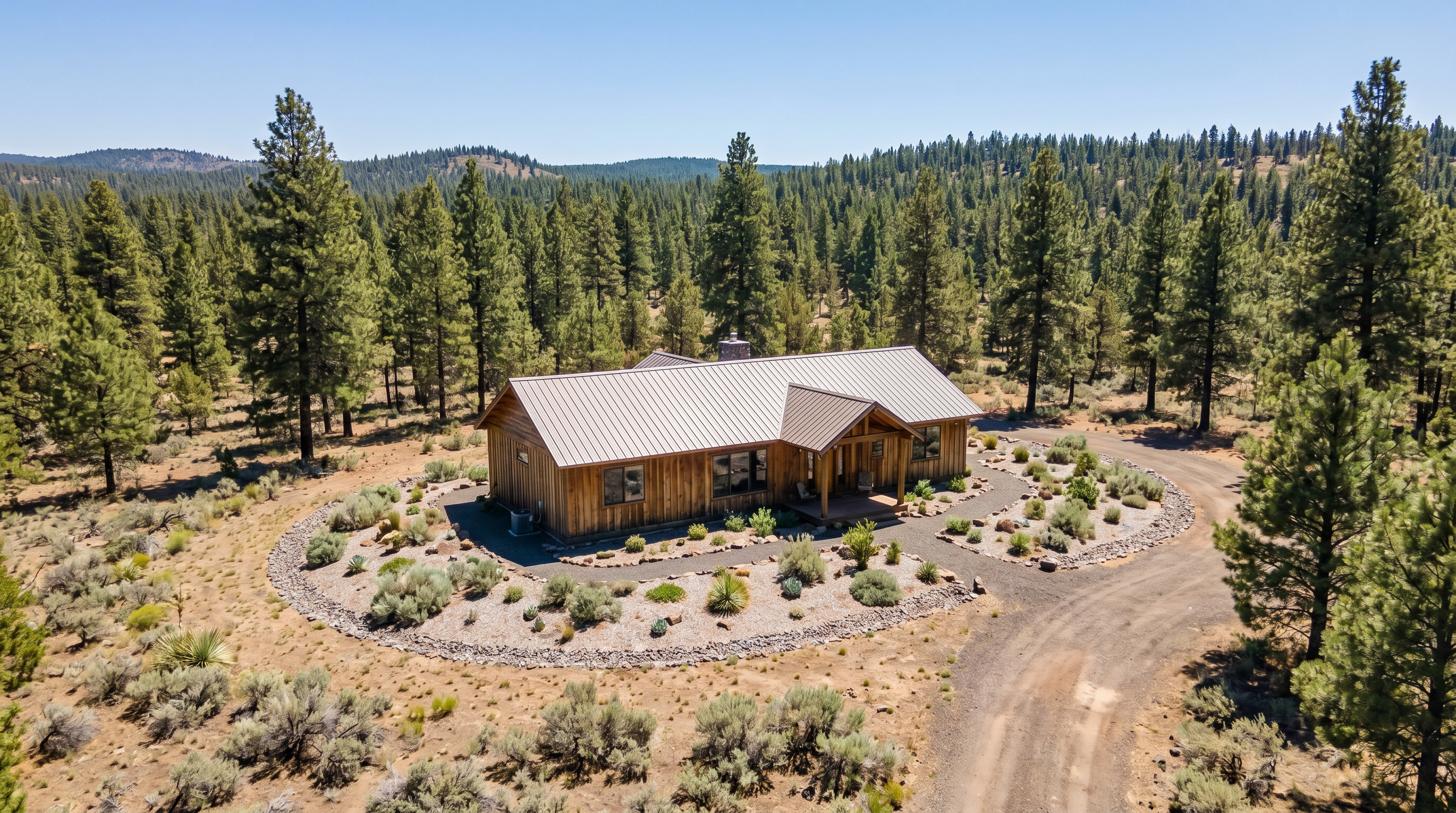
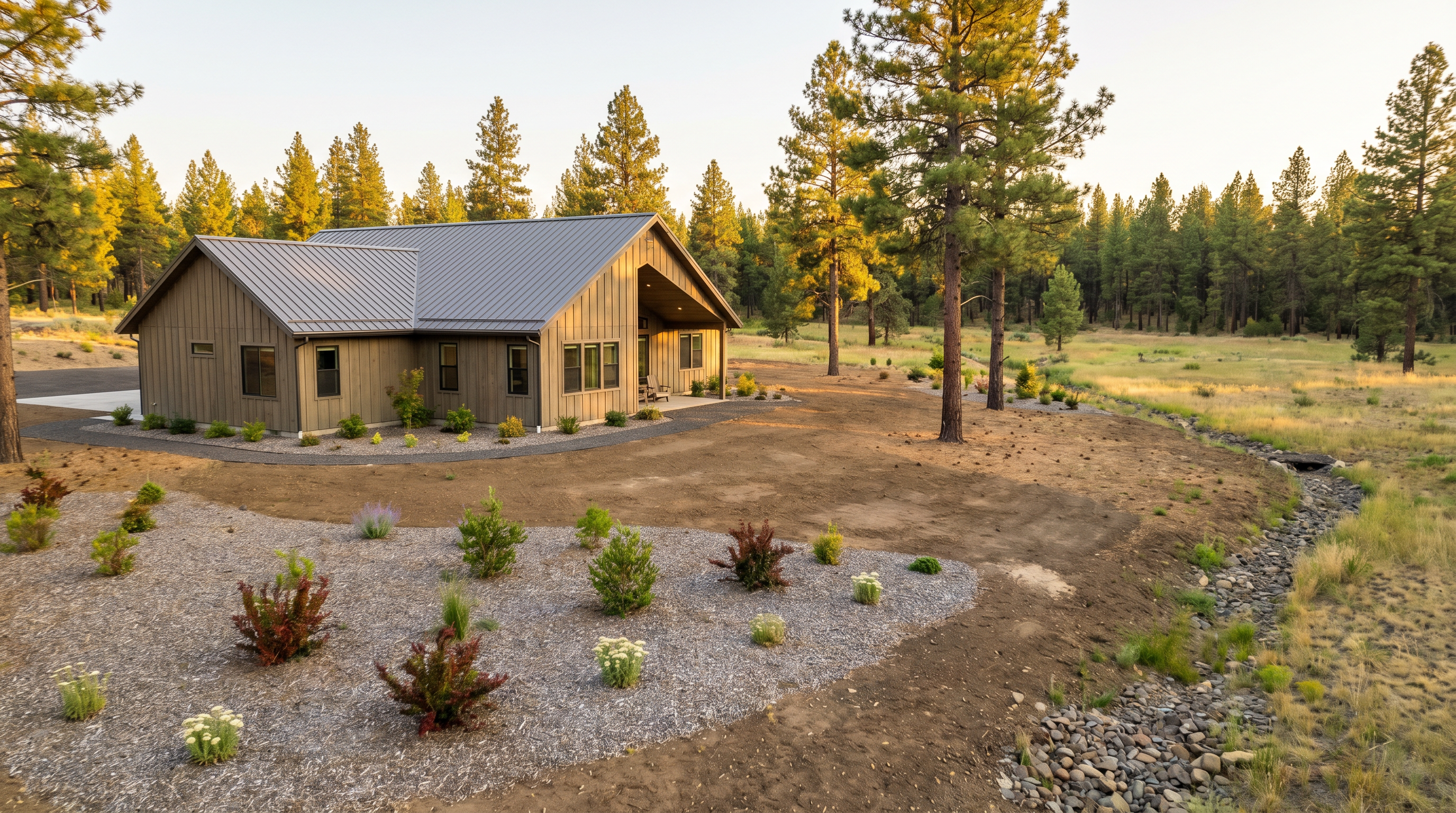
- Gravel and rock mulch installation within 5 feet of structure
- Ongoing maintenance programs to keep zones compliant year-round
Juniper Removal: Central Oregon's #1 Fire Risk
Western juniper is the most dangerous plant in Central Oregon landscapes. It contains highly volatile oils that cause it to burn intensely and spread embers rapidly. A single large juniper near your home can act as a torch that ignites your roof, deck, or siding before firefighters can respond. Juniper is also extremely common in Bend-area landscapes — many properties have multiple mature trees within the critical Zone 1 area.
We remove junipers of all sizes, from small ornamental plantings to large mature trees. Removal includes cutting, chipping or hauling debris, and stump grinding. We can also selectively prune junipers that are located in Zone 2 or Zone 3 where complete removal isn't necessary — raising the canopy height (limbs to 2x understory height) and removing dead wood significantly reduces their fire risk without eliminating them entirely.
Fire-Resistant Replanting for Central Oregon
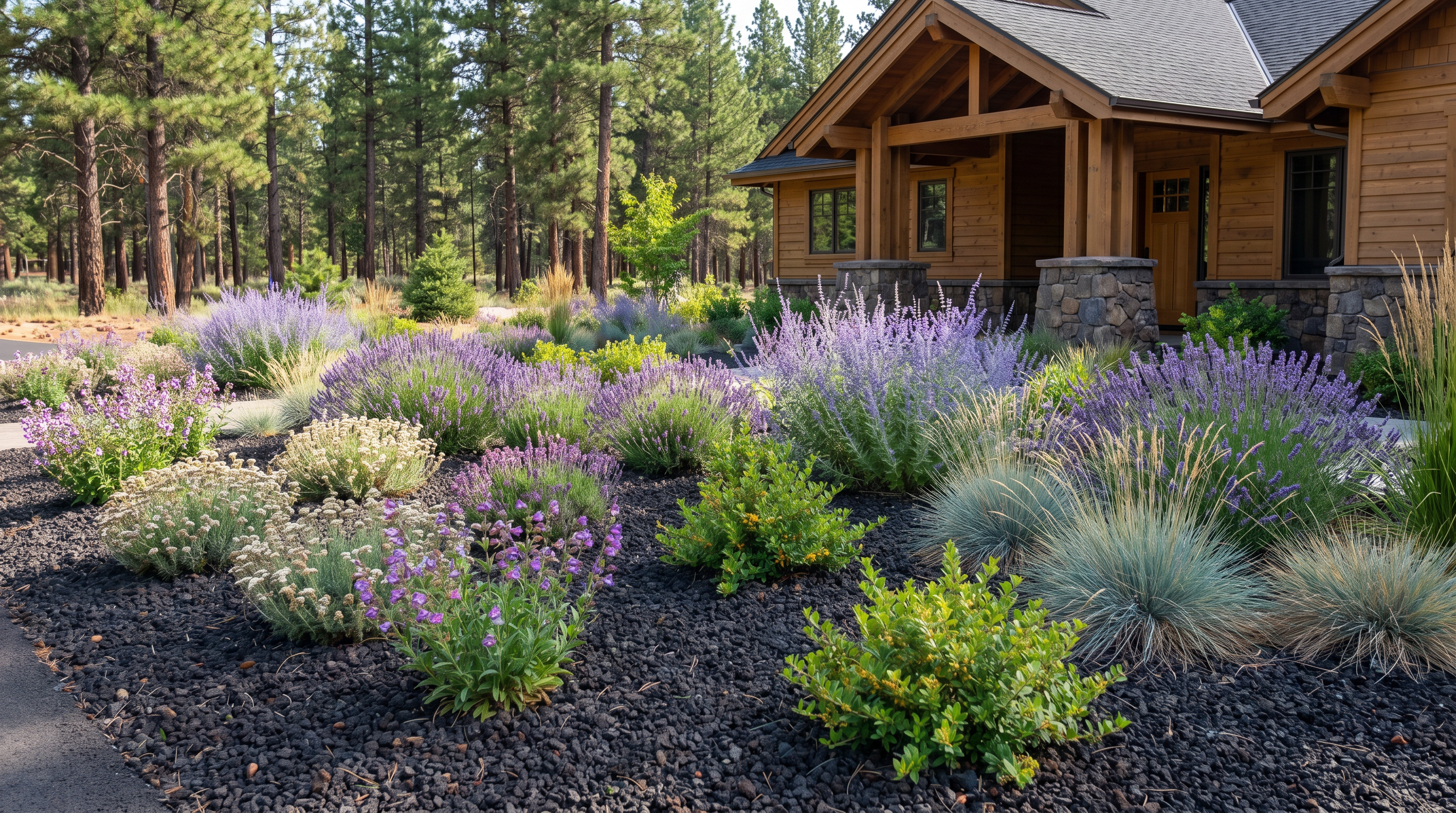
Removing hazardous plants doesn't mean living with a bare, unattractive yard. Central Oregon has a rich palette of fire-resistant plants that thrive in the high desert climate, require minimal water, and create genuinely beautiful landscapes. We specialize in designing firewise landscapes that look intentional and polished — not stripped and defensive.
Our favorite fire-resistant choices for Bend include yarrow (Achillea millefolium) for its lacy texture and long bloom season, native grasses kept mowed and irrigated, stonecrop and sedum groundcovers, snowberry (Symphoricarpos), currant (Ribes), and deciduous trees like aspen, maple, and cherry that have high moisture content and low flammability. We match plant selection to your specific zone, sun exposure, soil type, and design aesthetic.
R327 Covers the House — Newport Covers the Land
The City of Bend adopted Section R327 of the Oregon Residential Specialty Code, with requirements taking effect May 15, 2026. R327 is a building code — it governs construction materials like fire-resistant siding, noncombustible gutters, ember-resistant vents, and tempered windows on new homes. It says nothing about the landscape surrounding those homes.
That's where Newport Avenue comes in. A new home built to R327 standards is still surrounded by the same juniper trees, manzanita, and dry grass that make Central Oregon properties vulnerable to wildfire ignition. The structure may resist embers better, but if the vegetation within 30 feet ignites, the home is still at serious risk. Defensible space landscaping — clearing, zoning, and replanting the land around your home — is the essential complement to structural fire hardening that R327 doesn't address.
If you're building a new home in Bend and your contractor is meeting R327 requirements, call us to handle the landscape side. If you're in an existing home, R327 doesn't apply to you — but the wildfire risk does. Either way, Newport Avenue provides the defensible space work that building codes can't.
Irrigation for Defensible Space
Zone 1 (0–30 feet from your home) must be well-irrigated to maintain low flammability — dry, stressed plants are far more combustible than healthy, hydrated ones. Many Bend properties have irrigation systems that don't fully cover their Zone 1 area, or have systems that haven't been properly maintained. We assess your existing irrigation coverage as part of every firewise project and can extend, repair, or redesign your system to ensure complete Zone 1 coverage. A properly irrigated Zone 1 is one of the most effective fire protection investments you can make.
- Irrigation coverage assessment for Zone 1 and Zone 2
- System extension to cover previously unirrigated areas
- Smart controller upgrades for efficient water management
- Spring activation and fall winterization to keep system operational
FREE CONSULTATION · NO OBLIGATION
Contact Us to Learn More
We visit your property, listen to your vision, and provide a detailed written proposal — at no cost, no pressure.
Guides & Cost Estimates
Central Oregon Service Areas
SERVING BEND, OREGON & ALL OF CENTRAL OREGON
Read our complete guide to landscaping in Bend, Oregon — costs, neighborhoods, plant guides, and seasonal tips.